
Historical Feminization of Jobs and the Devaluation of the Degree

International Women’s Day is a day set aside to acknowledge women’s contributions to history, technology, business, art, and the world. It’s celebrated each year on March 8, and in conjunction with that, I generally write a blog post on the state of the gender pay gap. However, I’d like to highlight a different issue this year. I have noticed rhetoric within public discourse regarding the “usefulness” of a college degree. This argument is that college degrees have low ROI because higher education does a poor job of preparing students for career readiness, and that, given the cost of the degree, the compensation does not justify the expense. These arguments are rooted in the fallacy of incomplete evidence, which occurs when someone selectively highlights data points that confirm their position while ignoring a significant portion of related data that contradicts it. Higher education is not job training. The purpose of higher education is to enhance critical thinking skills and improve expertise in a given subject. And, although entry-level wages may have a negative relationship to the one-time expense of a degree, over the course of 40 years, those who hold bachelor’s degrees will, statistically, outearn those who don’t.
This is where the anti-college movement intersects with misogyny. Since 1982, women have earned more bachelor’s degrees than men, and they now make up over 50.7% of the college-educated labor force. This poses a significant threat to the patriarchy, which prefers that women assume traditional gender roles.
Pinkification
Within an economic or sociological context, “pinkification” is the process by which something transitions from being male-dominated to being predominantly female. While it sounds like a neutral shift in demographics, "pinkifying" is almost always used to describe the cultural and economic devaluation that follows. When women become the majority of degree holders, degrees and higher education are debased and marginalized. The same thing happens when jobs or industries transform from being predominantly male to majority female.
The Historical Feminization of Jobs
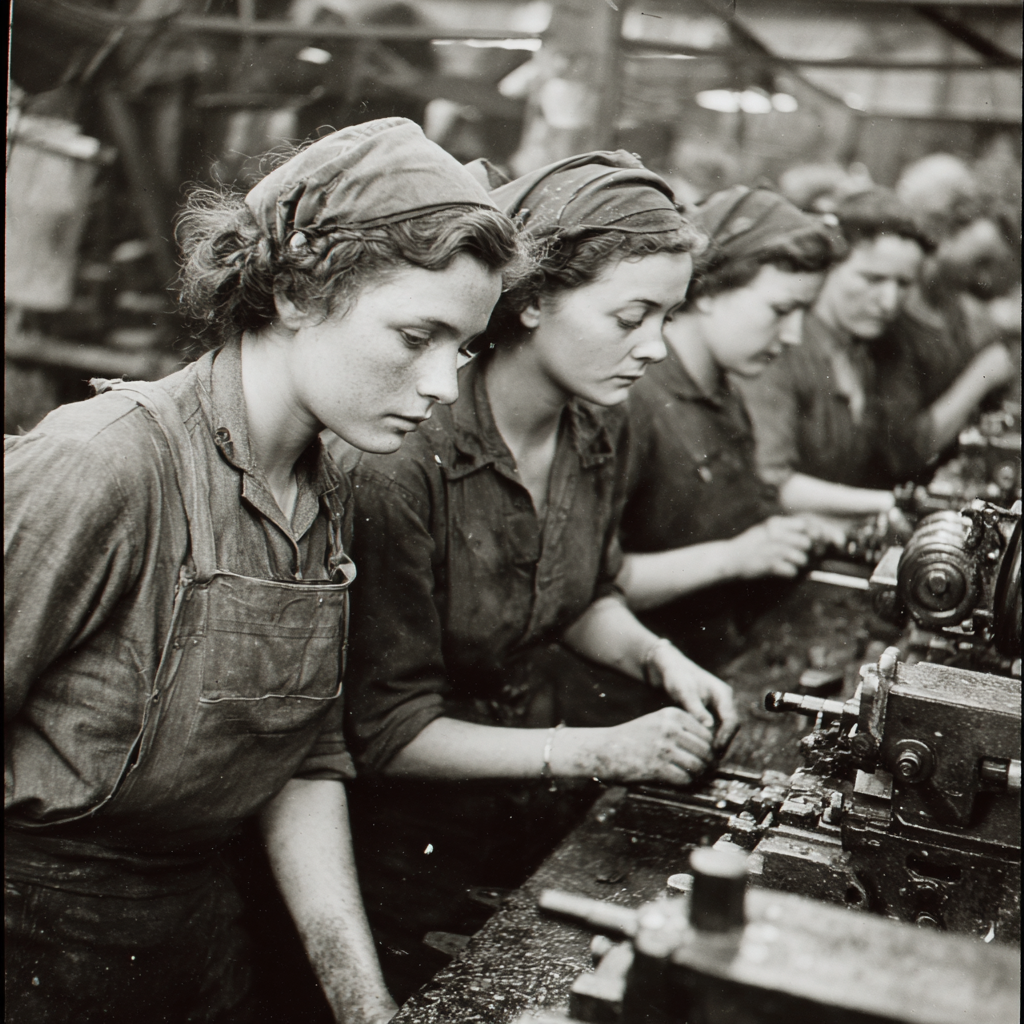
In the early 20th century, the role of a secretary was a high-status apprenticeship for men, viewed as a stepping stone to executive leadership. It required literacy, discretion, and administrative acumen. Today, the role is overwhelmingly female and categorized as "support staff," with a salary that reflects its perceived secondary status. This shift is not an anomaly; it is a documented sociological pattern known as occupational feminization. As women enter a field in large numbers, its social prestige and relative pay often decline. This phenomenon creates a striking paradox in the modern era: while women now outnumber men in earning college degrees, the very fields they dominate are frequently penalized by the market.
One of the most frequently cited examples is biology. According to research by sociologists like Paula England, as the percentage of women in biological sciences increased between 1950 and 2000, the relative pay for biologists fell. Conversely, in fields like computer science—which was actually pioneered by women like Ada Lovelace and the ENIAC programmers—wages and prestige skyrocketed only after the field was "masculinized" and rebranded as a rigorous, mathematical discipline in the late 1960s and 70s.
The Wage Gap at Play
Data suggests that even when controlling for education, skills, and hours worked, the feminization of a job remains a key predictor of lower pay. In a society that has historically viewed "women’s work" as an extension of domestic duties—nurturing, organizing, or caregiving—these skills are frequently viewed as "natural" rather than "technical." Consequently, the market treats them as less worthy of high compensation. When women "infuse" a field, the labor itself begins to be perceived as "softer," and its perceived economic value erodes. Sociological studies suggest that once an occupation reaches a certain threshold of female representation (often cited as 60% or more), it enters a "wage penalty" zone where the prestige of the role begins to decouple from its actual complexity or societal necessity.
The Economic Consequences
Feminization doesn’t just reduce opportunity for women; it does so for the men who remain in those fields and areas of study as well. This creates a "flight" effect: as a field becomes feminized, men are often incentivized to leave for "harder" (i.e., more masculine-coded) industries to protect their earning potential and social status. This cycle reinforces occupational segregation. Men stay in or move toward high-paying STEM and executive roles, while women, despite their superior numbers in higher education, are funneled into the "pink-collar" professional sectors.
The Bottom Line
The anti-education movement and the "pinkification" of the workforce are two sides of the same coin. By framing the college degree as a failing investment, just as women have mastered the system, the narrative attempts to move the goalposts of success. We must recognize that the devaluation of these fields is not a reflection of a sudden lack of rigor or necessity, but rather a lingering cultural bias that equates "female-dominated" with "lesser than." The solution to this disparity isn't just encouraging more women to enter "male" fields like coding or finance. True equity requires a shift in how we value labor that is traditionally associated with women. Until we decouple the value of labor from the gender of the laborer, the wage gap will remain an inevitable byproduct of our own beliefs.