
Blog
Debra Wheatman, President of Careers Done Write, provides expert insight to the job search process that puts your career in gear with tips for interviewing, networking, job search strategies and how to create a winning resume and cover letter.

The Staples Baddie Rewrites the Rules of Retail Marketing
A charismatic associate named Kaeden (known online as @blivxx) has done more than just trend on TikTok. She has provided Staples with a masterclass in organic brand revitalization. At a time when legacy retailers struggle to remain relevant to Gen Z, this employee-led movement has fundamentally shifted the brand's perception from that of a dusty office supply closet to a creative destination….

The Black Box Under Fire
The metaphor of the black box is often used to describe a system in which internal systems are invisible or incomprehensible. Such systems allow observers to see only a carefully curated narrative. This term is used in behavioral psychology and cybernetics to describe complex mechanisms, such as the human mind; the inner workings of such mechanisms remain a mystery despite extensive research. The metaphor also applies in the performing arts. A black box theater is a simple, unadorned performance space, typically a large square room with black walls and a flat floor. Unlike traditional theaters, it lacks a permanent stage, proscenium arch, or fixed seating, instead offering a blank canvas for directors and designers. Regardless of the context, with the black box, you only see what the authority wants you to see….

Black History Month: Supporting Black-Owned Businesses
Corporate social responsibility (CSR) initiatives have historically been viewed as “nice to have,” rather than the strategic imperatives they are. All too often, such programs rely on peripheral activity. During Black History Month, performative companies may collect charitable donations, issue feel-good press releases, and change corporate logos. However, the world has become ever more interconnected, and consumer expectations have shifted. Narratives have changed. Supporting Black-owned businesses is not just a moral issue; it is a focused business strategy….

Impactful or Performative? Getting Black History Month Right
As we celebrate the centennial of Black History Month, I want to reflect on what this means in the context of corporate culture. What began as a crucial academic effort to acknowledge the contributions of Black Americans has become a significant touchstone for American companies. Integrating Black History Month into corporate culture offers both opportunities for meaningful progress and the risk of purely performative gestures….
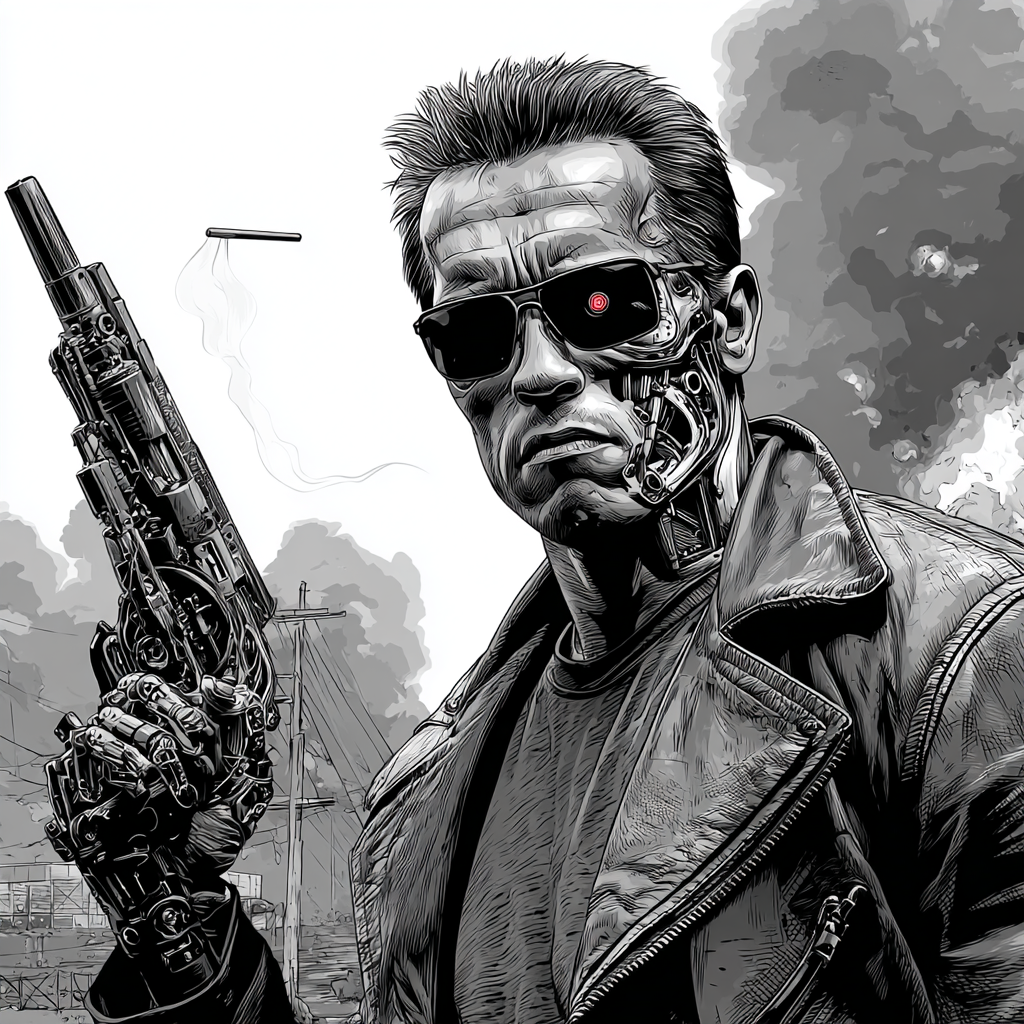
From Sci-Fi to Strategy: AI and the Modern Workplace
Indisputably, popular culture’s most famous AI nightmare is James Cameron’s film The Terminator, which was released in the fall of 1984. In addition to making “I’ll be back” part of the mainstream lexicon, the film continues to resonate because it captures a fear that feels newly relevant in today’s AI-driven world. While modern artificial intelligence bears no resemblance to a self-aware Skynet, the film’s core warning about handing too much autonomy to powerful systems without sufficient oversight mirrors real concerns surrounding automation and algorithmic decision-making. As AI becomes embedded in everything from finance to defense, The Terminator serves less as a prediction and more as a metaphor, reminding us that the greatest risks of AI stem not from machines themselves, but from how humans design, deploy, and trust them….

Avoid Unconscious Biases in Hiring
Unconscious bias, the most common heuristic trap, is a significant hurdle in contemporary recruitment and often results in a homogenous workforce and the exclusion of top-tier talent. Because these biases are involuntary, they cannot be abated with willpower alone. Instead, hiring companies should design processes that create “speed bumps” to disrupt these mental shortcuts….

Streaming Past Success: Lessons in Adaptability and Humility
On a Saturday night in 1990, the internet was in its infancy, Wi-Fi was a futuristic technology, and video streaming had yet to be conceived. Consumers went to physical stores to rent VHS tapes to watch at home. By the mid to late 1980s, almost two-thirds of American households owned a VCR. VHS had achieved market dominance over the technologically superior Betamax and had driven a new culture of at-home movie enjoyment. And no one was a bigger player in this market than Blockbuster Video. Their stores sprang up all over the country and were immediately recognizable by their blue-and-yellow logo, which also adorned the company’s membership cards. It seemed as though their growth was unstoppable….

The Burgeoning Issue of Fake Candidates
Just ten years ago, AI seemed like a far-off, futuristic theory. Now, it is a ubiquitous reality. Almost every press release, business journal, and job posting references AI or emphasizes the importance of being knowledgeable about leveraging it. As any job seeker knows, AI is being used extensively in the recruitment space, with companies using it for screening, interviewing, and onboarding candidates. This technology has also given rise to the phenomenon of the fake job candidate. What was previously limited to embellished resumes or inflated experience has evolved into sophisticated forms of deception, including identity theft, interview impersonation, falsified credentials, and rampant scams. This can create significant financial, security, and reputational risks that extend far beyond merely making a bad hire….

Eight Trends that Will Shape the Workforce in the New Year
The 2026 job market is poised for transformation. As companies adapt to rapid shifts in technology, changing employee expectations, and external factors such as globalization, the new year is set to break the old rules. Some trends we will see will be evolutionary. Others will be revolutionary. Regardless, these dramatic changes will fundamentally reshape the way companies hire and source talent, and how people actually work….

Top Hiring Trends of 2025
The end of the year is here, and it’s time for my annual retrospective. External factors such as technological acceleration, shifting worker expectations, and economic uncertainty shaped the job market in 2025. In sharp contrast to 2021 and 2022, hiring became much more selective. Some would say that the process became absurd, with protracted interviews, projects, presentations, and assessments. Candidates waited, sometimes for months, to hear whether they had secured the job. Employers still wanted to attract and retain talent in this challenging market, and those that embraced more flexible talent strategies were better positioned to compete for that top talent….